
As a Catholic Primary School our faith lies at the centre of everything we do, this is reflected in our school mission statement Christ Be our Light, in love, in life and in learning.
Our curriculum is broad and balanced, based on the National Curriculum 2014 and ‘Come and See’ RE scheme, underpinned by our core values:
Love, Joy, Peace, Forgiveness, Reconciliation, Justice, Respect
We plan opportunities throughout the school to enhance children’s learning experiences and to help them develop into confident and responsible young people.
PSHE is taught through the ‘Ten Ten scheme of work.
Curriculum Drivers
Rather than subjects driving the curriculum, it is the needs of children that have determined the emphasis. It is important that children learn what is in the statutory curriculum, but we know that children need much more than this. Balancing children’s needs with the statutory curriculum will always be a challenge, but instead of the two acting in opposition we can ensure the content of the curriculum meets the needs of children and fulfils statutory requirements. To do this, we have established some key ‘drivers’ for our school curriculum. These spell the word ‘Light’
- L is for Love
- I is for Inspire
- G is for greatness
- H is for Happiness
- T is for Teaching
The curriculum is founded by evidence led practice with an ambition for excellence. Teachers have undertaken CPD to enable them to deliver teaching of the highest quality. A model of retrieval, instruction, deliberate practice, guided independent work and challenge is adopted to ensure that children develop their substantive and disciplinary knowledge.
We have high ambitions to deliver an outstanding curriculum. As every teacher is a leader this is a challenge but one we have embraced as a relatively small primary school. The new curriculum launched in September 2022 will enable the school to achieve this. The CPD that took place in the Summer Term and In the PD Days at the beginning of the year enable us to convert swiftly to this new curriculum intent.
We teach at St Joseph’s with our children’s best interests at the heart of every decision. In the main our children are independent, inquisitive and thoughtful workers. We use a research based scheme of work as a base curriculum for English, Science, History, Geography, DT, MFL and Art. which is:
- ‘Connected’
- ‘Cumulative’
- ‘Coherent’
Our curriculum is underpinned by evidence, research and cognitive science. Modules are deliberately sequenced for robust progression and allows teachers to focus on the lesson.
There is an emphasis on oracy and vocabulary acquisition, retention and use to break down learning barriers and accelerate progress. A rich diet of language and vocabulary is deliberately planned for.
Specific skills are discreetly taught and practised so that they become transferable. The sequenced modules activate prior learning, build on skills and deepen knowledge AND understanding. Learning, vocabulary and content is cumulative; content is learned, retrieved and built upon.
Our curriculum ensures that academic development, creativity and problem solving, as well as physical development, well-being and mental health are key elements that support the
development of our pupils and promote a positive attitude to learning. Our curriculum promotes an understanding and respect for our local east Cleveland community, of which we are proud, as well as the diversity outside of the local area.
It utilises the skills, knowledge and cultural wealth of the community while supporting the children’s spiritual, moral, social and cultural development, ensuring that children are well prepared for life in Modern Britain
National curriculum
For more information about expectations for your child in each subject and year group, please visit the link below:
Curriculum Implementation
St Joseph’s has a coherent school wide model of pedagogy across all subjects. This can be seen in the responsive teaching model:
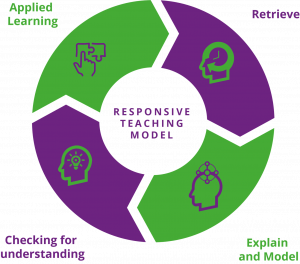
Retrieve: 
Retrieval tasks support children in knowing more and remembering more over time. Retrieval tasks are designed into each lesson and help children to make links between previous units of work over time and to make stronger connections with their learning.
‘Using your memory shapes your memory ‘ Robert Bjork
Explain and Model: 
The most effective teachers have a deep knowledge of the subject/content they are teaching, this is one of the core foundations for preparing and delivering effective lessons.
Check for understanding:
Teachers need to develop the skills so they can be responsive, adjust explanations and tasks according to how pupils are responding. The central mechanism in effective classroom talk is good use of questioning.
‘There will be a gap between what you taught and what they understood. Regardless of why it will be your job to fix it.’ Doug Lemov ‘Teach Like a Champion’
Applied Learning:
Following guided and scaffolded practice there needs to be opportunities for independent application in order for skills and knowledge to become automatic and embedded.
Means of Measuring Impact:
The curriculum is regularly reviewed, developed, monitored and evaluated by the Subject Leaders, external advisers and governors, leading to improvements and innovation.
Subject leaders play an important part in the success of the curriculum by leading a regular programme of monitoring, evaluation and review and the celebration of good practice contributes to the ongoing commitment to evolve and improve further. All subject leaders are given the opportunity to keep developing their own subject knowledge, skills and understanding, so they can support curriculum development and their colleagues throughout the school.
Pupils develop detailed knowledge and skills across the curriculum and, as a result, achieve well. The process to change the main body of the curriculum content to CUSP recently means we are yet to establish the impact of this change on the children.
Having said this, pupils are ready for the next stage of education when they leave our school. They have the knowledge and skills they need and pupils with SEND achieve the best possible outcomes.
Pupils’ work across the curriculum is of good quality. Pupils read widely and often, with fluency and comprehension appropriate to their age. They are able to apply mathematical knowledge, concepts and procedures appropriately for their age.
Children with Special Needs, including Able, Gifted and Talented (See also SEND policy)
The curriculum in our school is designed to provide access and opportunity for all children who attend the school, as stated in our SEND policy. We always provide additional resources and support for children with special needs.
If a child has a special need, our school does all it can to meet these individual needs. We comply with the requirements set out in the SEN Code of Practice in providing for children with special needs. If staff or parents or carers raise a concern about a child, his/her teacher will make an assessment under advice from the SENDCo. In most instances the teacher is able to provide resources and educational opportunities which meet the child’s needs within the normal class organisation. Support staff or specialist teachers may be used to assist the child.
If a child is working at the extended level they will be given open-ended questions and tasks and encouraged to follow lines of thought independently.
The KS1/KS2 Curriculum
St. Joseph’s is committed to meeting the requirements of the new primary curriculum from September 2014. Our School Curriculum follows all the requirements of the National Curriculum but we are proud to offer a much broader curriculum, making the most of many and varied opportunities to broaden and enrich the curriculum for our children.
We have updated our schemes of work to reflect the content and challenge of the new curriculum. Teachers have received training in the key areas of curriculum change.
Mathematics
The Maths curriculum is designed to enable children to become fluent in the fundamentals of mathematics so that they develop conceptual understanding and the ability to recall and apply knowledge rapidly and accurately. Children work towards developing the skills to reason mathematically and solve problems.
English
Our English curriculum is planned to develop the basic skills of reading and writing as well as the enjoyment of books and effective communication.
We aspire to foster an environment that encourages development of language by providing a rich provision of opportunities to interact and communicate with each other. We stress the values of listening and speaking skills and plan for opportunities to develop these areas of the across the curriculum.
The development of writing skills is an important aspect of our work. It covers all forms of writing for different purposes; factual, creative and personal. We aim to achieve progressive competency and accuracy in spelling and punctuation and aim for children to develop a legible style of handwriting.
Science
Children learn through investigation, research, asking questions and planning ways in which to find answers. We aim to provide children with learning experiences to develop an understanding of the world by using and applying scientific knowledge and skills. Children are encouraged to use different types of scientific enquiry to ask and answer questions about each topic through first hand experiences. Science is taught through a variety of topics covering Light, Seasonal Change, Plants and Animals, Materials, Sound, Habitats, Forces and Magnets, Light, Rocks, States of Matter, Electricity, Earth and Space and Evolution and Inheritance.
History
Our History curriculum aims to give children the opportunity to develop the skills and ideas needed to retrieve information from books, ICT, pictures, people and places, the ability to examine and evaluate evidence and an understanding of chronology, cause and effect and the influence of the past upon the present.
Geography
The Geography curriculum aims to enable the children to develop geographical knowledge, understanding and enquiry, mapping skills and fieldwork techniques, an appreciation of the environment and the need to protect it and a greater understanding of the UK and the wider world.
Children’s work includes the study of places and covers a range of physical, human and environmental geography.
Physical Education
PE provision includes a range of games activities, gymnastics, dance, athletics, swimming and outdoor adventurous activities.
Children have the opportunity to develop individual skills such as co-ordination, balance and control as well as an appreciation of the benefits of cooperation and teamwork and come to understand the advantages of healthy, safe exercise to their general physical wellbeing. We aim to provide two hours of high quality PE per class per week.
We believe swimming is an extremely important life skill and therefore offer swimming as part of the PE curriculum to all children from Y1 upwards.
Music
Music is developed across all age groups from EYFS to year 6. The children are encouraged to compose, listen, discuss and perform with a variety of audiences in mind. They learn to appreciate music of different styles, cultures and times, and to use their voices and a range of instruments as expressive media.
Children are given the opportunity to learn a tuned instrument in KS2. We work with Tees Valley Music Service to offer a range of music experiences to our children.
Modern Foreign Languages
All children in Key Stage 2 study French where they develop their speaking and listening skills as well as their ability to read and write French. We have a French day each year where children have the opportunity to taste food and to find out about the French culture.
Design & Technology (D&T)
DT is primarily concerned with generating ideas, making and doing. It provides opportunities for children to imagine, make decisions, create solutions and put them into practice. D&T enables children to use appropriate apparatus and equipment. We teach D&T largely through a cross curricular approach while teaching specific skills as and when necessary.
Art & Design
Children are given the opportunity to draw, paint and create three-dimensional work using a variety of media and stimuli. An appreciation of the work of famous artists in different periods of history, the exploration of the immediate environment and other cultures and development of their own expressive ideas is encouraged. Through art, we hope that pupils develop an aesthetic awareness.
Work is displayed in classrooms and areas around the school.
Computing
School has laptops and tablets for children to develop their Computing skills. They have weekly lessons as well as the opportunities to use ICT across the curriculum.
Personal, Social and Health Education & Citizenship
As a school we have developed our work alongside the ten ten resources called Life to the Full.
This is an ambitious, evolving programme of work that has been several years in the making which we hope and pray will have a transformative impact on the life of your
school community.
In England, Relationship and Health Education became statutory for all primary schools from September 2020.
We have based the structure of Life to the Full on ‘A Model Catholic RSE Curriculum’ by the Catholic Education Service, which was highlighted as a work of good practice by the Department of Education. Therefore, we have a good foundation for a programme that will be fit for purpose over the coming years.
However, we’ve gone beyond simply producing a series of lesson plans; instead, we have created an entire platform of creative resources that we hope will engage, inform and inspire
your children, parents and staff. This includes interactive video content, story-based activities and original worship music, all whilst employing a wide range of teaching tools and an
accompanying programme of classroom prayers.
www.gov.uk/government/publications/national-curriculum-in-england-primary-curriculum
Early Years Foundation Stage
Our EYFS is designed so that every single child can build a solid foundation and develop the skills and knowledge needed to be ready for their next stage in education.
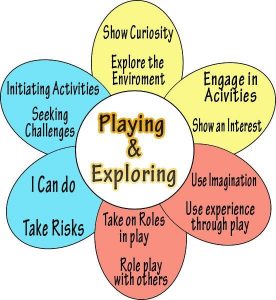
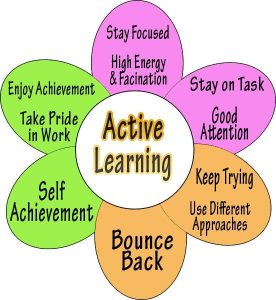
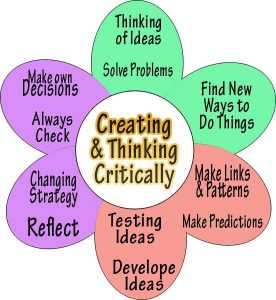
Characteristics of Effective Teaching and Learning
We understand the importance of the Characteristics of Effective Teaching and Learning and these are weaved into our curriculum. These underpin everything that we do at St Joseph’s.
Intent
Our Foundation Stage curriculum is designed to reflect the interests and needs of our children and immerse our children in a language rich environment. We prioritise high quality interactions punctuated with adult focussed activities where appropriate.
Our curriculum is developed to be sequential, progressional learning, where pupils know more and can do more, building on what they have been previously taught. It is also designed to be responsive to the needs of our children, families and community.
Our EYFS curriculum is also in line with our core values as a school:
Love, Joy, Peace, Forgiveness, Reconciliation, Justice, Respect
At St Joseph’s Catholic Primary School, we believe that every child is a unique child, and we are committed in providing a high-quality early year’s education which gives children a secure and confident start to their school life and nurtures a lifelong love of learning where children will be resilient, capable, confident and self-assured.
We aim to:
- Create a happy, secure and fun environment in which all children feel safe and cared for.
- Provide a rich and stimulating environment both within the indoor and outdoor setting in which all children can meet their full potential and grow as confident, keen, independent learners.
- Focus on the development of every child as an individual, valuing and building on their previous experiences and responding to their individual needs by planning learning activities, which are challenging and enjoyable experiences for each child in all areas of learning and development both within our indoor and outdoor setting.
- Provide stimulating activities for the children, as well as planning activities to match children’s interests.
- Prepare, enhance and offer opportunities for all children including the disadvantaged to develop their cultural capital in order for them to develop the knowledge they will need to prepare them for their future success.
- Ensure that children experience the awe and wonder of the world in which they live, through the seven areas of learning.
- Encourage good social relationships, developing self-esteem and respect for others
- Ensure that every child is included and supported in order to ensure that all children make good progress and that their achievements are celebrated.
- Ensure that every child has a language rich environment which promotes language strengthening and development.